Intro
Let’s be honest: Shibuya Crossing looks incredible in every travel video… until you’re actually standing in it, sandwiched between three tour groups, sweating through your jacket, and wondering if you’re supposed to be enjoying this.
⚡ Quick Tip: Shibuya Sky entry is timed and tickets sell out fast! You can Reserve your Shibuya Sky ticket on Klook before you visit.
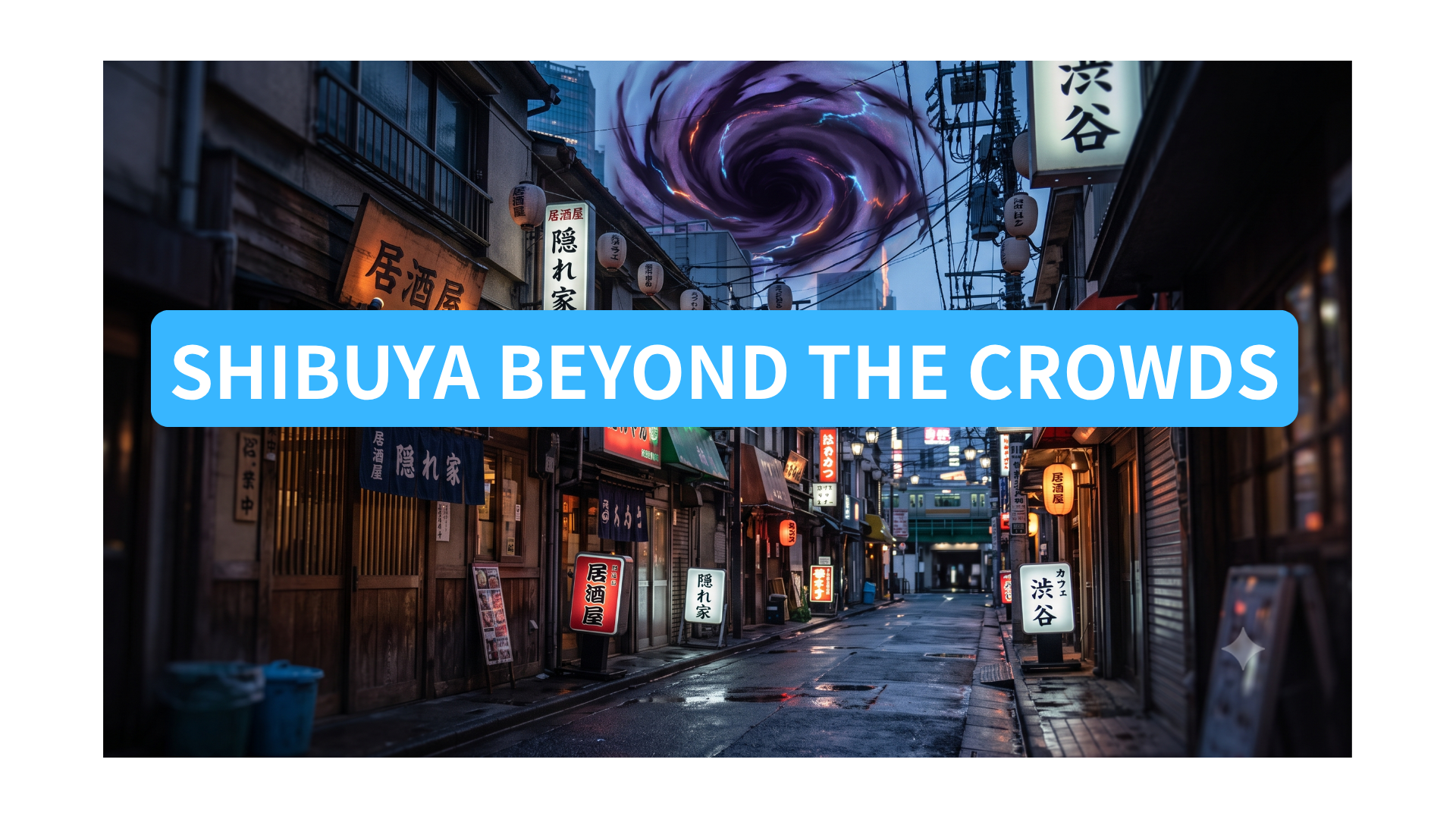
Here’s the thing locals already know. Shibuya isn’t just one chaotic intersection — it’s a maze of quiet corners, rooftop gardens, and hidden staircases that most tourists walk right past. And if you’re here chasing something specific (looking at you, Jujutsu Kaisen fans), the real magic isn’t in the crowd. It’s in the details most people miss entirely: the exact platform where Gojo sealed himself away, the back alley where Nobara took on a swarm of Mahito’s clones, the skywalk with the view that matches the anime frame-for-frame.
In this guide, we’re combining two things rarely put together properly: precise, walkable Shibuya Incident pilgrimage spots (down to the floor number), and real hidden cafes where you can disappear from the noise for twenty minutes and reset. No vague “visit Shibuya’s back streets” advice — just exact locations, the best time to go, and where to recover afterward with a proper cup of matcha.
Let’s get into it.
The Real Shibuya Incident Pilgrimage Spots (With Exact Locations)
Most pilgrimage guides online just say “go to Shibuya” and call it a day. That’s not going to cut it here. Below are four real, walkable locations tied directly to the Shibuya Incident arc — and importantly, how to actually find them once you’re standing on the street looking confused (we’ve all been there).
- Shibuya Hikarie — The Emotional Core of the Arc
Address: 2-21-1 Shibuya
If you only visit one spot on this list, make it this one. Shibuya Hikarie isn’t just a shopping complex — it’s the literal battlefield of one of the arc’s most devastating moments.
B3F — The open atrium here is instantly recognizable as Gojo’s breakout space in the anime. Stand near the railing and look up; the architecture matches almost exactly.
B5F (Fukutoshin Line platform) — This is the big one. The actual subway platform where Gojo faced off against Hanami and Jogo, and where he was ultimately sealed. Walking through here as a regular commuter, then realizing what happened on this exact platform, hits different.
B2F — Where Yuji and Choso’s confrontation plays out. Quieter, easier to take in without a crowd forming around you.
Local tip: Go on a weekday morning before 10am. The B5F platform is a functioning train station, so evenings and weekends get packed with regular commuters, not just fans. Early morning gives you space to actually take it in.
🎫 Book Shibuya Sky Tickets on Klook (Near Shibuya Hikarie)
- Shibuya Mark City, 4F — The Waiting Room That Looks Exactly Like the Anime
Address: 1-12-1 Dogenzaka
This one surprises people because it doesn’t feel like a “landmark” — it’s a restaurant corridor inside a shopping mall. But that’s exactly the point.
The 4F restaurant avenue at Mark City is where the Kyoto sorcerers wait in the anime, and the resemblance is uncanny — the lighting, the corridor shape, the storefronts. It’s one of those spots where the anime’s background artists clearly just… drew what was already there.
Local tip: This floor is genuinely used for lunch by office workers, so it never gets “pilgrimage crowded.” You can take your time here without feeling rushed or watched. - Cerulean Tower Tokyu Hotel — The Skyline That Matches the Anime Frame-for-Frame
Address: 26-1 Sakuragaokacho
This is the tower where Mahito’s domain barrier spikes were driven into the skyline in the anime — and once you know that, you can’t unsee it every time you look up at Shibuya’s skyline again.
The real moment worth your time isn’t inside the hotel, though — it’s the pedestrian skywalk near the base of the tower. The angle from there matches the anime’s establishing shots almost exactly, especially around sunset.
If you want to actually stay inside this landmark rather than just photograph it from below, Cerulean Tower Tokyu Hotel takes bookings directly, and waking up to that exact skyline view hits different. - Dogenzaka Koji & The SHIBUYA109 Front — Where the Chaos Really Happened
Address: Dogenzaka 2-chome
Right behind SHIBUYA109 is a narrow, retro brick alley that most tourists never notice because it’s tucked just out of sight of the main street. This is where Nobara faced off against Mahito’s clones — and standing in it, you’ll immediately notice how tight and atmospheric the space is, almost claustrophobic in exactly the way the fight scene felt.
The intersection directly in front of 109 is the other key spot — this is where Mahora was summoned, and it’s honestly one of the few times a real Shibuya intersection has more anime significance than the famous crossing itself.
Local tip: The alley is easy to miss on your first pass. Look for the narrow gap between the buildings just behind 109’s main entrance — locals cut through here to avoid the front crowds, which is a nice bit of irony given the scene that plays out there.
Where to Disappear When Shibuya Gets to Be Too Much
Here’s something nobody tells you before your first trip to Shibuya: the noise is cumulative. It doesn’t hit you all at once — it builds, crossing by crossing, escalator by escalator, until suddenly you just need five minutes somewhere quiet. Locals know exactly where those five minutes live. Here are three of them, all within easy walking distance of the spots above.
- Kissa Satella — The Retro Standing Cafe Time Forgot
5 minutes on foot from Shibuya Hikarie
Kissa Satella is the kind of place that makes you lower your voice the second you walk in, even though no one’s asked you to. It’s a small, old-school standing cafe — the kind of retro Showa-era spot that’s slowly disappearing from Tokyo, tucked away just far enough from Hikarie that the crowds never quite find it.
Order the purin (Japanese custard pudding) without hesitation — it’s dense, not too sweet, and comes with a caramel sauce that’s clearly made in-house. Pair it with the matcha latte if you want something warm to hold onto while your ears stop ringing from the crossing.
Local tip: There’s limited seating, and it’s genuinely popular with neighborhood regulars, not tourists — so if it looks full, don’t be shy about a short wait. It’s worth it. - Morino Toshoshitsu (森の図書室) — The Secret Bookshelf Cafe You Ring a Doorbell For
Right next to SHIBUYA109, 8th floor
This one feels less like “finding a cafe” and more like being let in on a secret. Morino Toshoshitsu — literally “The Forest Library” — is tucked away on the 8th floor of a nondescript building, and you actually have to press an intercom buzzer to be let in.
That small ritual does something psychologically wonderful: it draws a hard line between the chaos of Dogenzaka below and the hush of the room upstairs. Inside, it’s all warm lighting, tall bookshelves, and the kind of quiet that feels almost startling after the street noise.
Given that this is a two-minute walk from the alley where Nobara fought off Mahito’s clones, it makes for a genuinely poetic contrast — chaos below, total stillness eight floors up.
Local tip: Go with zero expectations of rushing. This isn’t a “grab a coffee and go” kind of place — it’s built for lingering, so budget at least 30–40 minutes here. - JINNAN HOUSE — The Garden Oasis Most Tourists Walk Right Past
8 minutes on foot from Hachiko Exit
If Morino Toshoshitsu is a secret hideout, JINNAN HOUSE is the opposite kind of escape — open, green, and full of natural light. It’s a wa-modern (Japanese-modern) space built around an honest-to-goodness garden, which feels almost surreal given you’re still technically inside Shibuya.
This is the spot for a proper matcha break — they take their tea seriously here, with a solid range of Japanese tea options beyond just the usual matcha latte. Sit near the garden side if you can; it’s the closest thing to a countryside break you’ll get without leaving central Tokyo.
If you’d rather have a local guide walk you through Shibuya’s pilgrimage spots and hidden cafes in one smooth route (instead of navigating alone with a map), a small-group Shibuya walking tour covers a lot of this ground effortlessly.
Early Pilgrimage, Easy Afternoon: How to Time Your Visit
If there’s one piece of advice to take from this whole guide, it’s this: go early, then reward yourself later.
Start at Shibuya Hikarie before 10am, while the B5F platform is still relatively calm and you can actually stand still without getting swept along by rush-hour foot traffic. Work your way through Mark City, the Cerulean Tower skywalk, and the Dogenzaka alley over the course of the late morning — none of these spots are commuter bottlenecks, so they stay walkable even as the day picks up.
By early afternoon, when Shibuya Crossing is at its most overwhelming and the main streets are shoulder-to-shoulder, that’s your cue to disappear into one of the three cafes above. Let the crowds do their thing outside while you’re sitting somewhere quiet with a purin and a matcha latte, feeling smug about it.
Staying nearby the night before makes this early start dramatically easier — look for a hotel within walking distance of Hikarie so you can wake up minutes from the start line instead of commuting in from across the city.
If you’d rather not think about transit logistics at all, book your airport transfer ahead of time — Narita Airport Limousine Bus or Haneda Airport Limousine Bus both drop you right in central Tokyo, no navigating trains with luggage required.
Final Thoughts: Shibuya Rewards the People Who Slow Down
Most first-time visitors treat Shibuya like a checklist — see the crossing, get the photo, move on. But the version of Shibuya that actually stays with you is the quieter one: standing on a subway platform where an anime’s most devastating moment unfolded, then twenty minutes later sipping matcha in a garden you didn’t know existed, three floors above the noise.
That’s really the whole philosophy behind this guide. You don’t need to choose between “seeing the famous spots” and “avoiding the crowds.” You just need to know exactly where to go, exactly when to go there, and exactly where to disappear to afterward. Now you do.
Whichever spot hits hardest for you — the Hikarie platform, the alley behind 109, or just finding Morino Toshoshitsu’s buzzer on the first try — you’ll walk away with a version of Shibuya most visitors never get to see.
Planning the rest of your Tokyo itinerary? A little logistics prep before you arrive goes a long way toward keeping the whole trip stress-free.
Frequently Asked Questions
Is Shibuya Hikarie’s B5F platform actually open to the public?
Yes — it’s a fully functioning platform on the Fukutoshin Line, not a restricted area. You can walk through freely like any other commuter. Just be mindful that it’s a real train station, so avoid lingering directly in the flow of foot traffic during rush hour (roughly 7:30–9:30am and 5:30–7:30pm on weekdays).
Is it safe to explore Shibuya early in the morning?
Very safe. Japan’s low crime rate makes early-morning exploring one of the easiest ways to experience popular areas without the stress you might associate with quiet streets elsewhere. Most shops simply aren’t open yet before 9 or 10am, but the streets themselves are calm rather than empty or unsettling.
Do I need to speak Japanese to get into Morino Toshoshitsu?
No. Press the intercom button, and staff are used to visitors — a simple “sumimasen” (excuse me) as you enter is more than enough. Pointing at a menu item works fine too.
How much time should I budget for this whole route?
Realistically, 4–5 hours if you want to move at an unrushed pace: roughly 2 hours for the four pilgrimage spots, plus time for one or two cafe stops along the way. It’s easy to stretch this into a full leisurely day if you’re not in a hurry.
Are these spots worth visiting if I’m not a Jujutsu Kaisen fan?
Honestly, yes. Hikarie’s architecture, the Mark City corridor, and the Cerulean Tower skywalk are worth seeing purely as interesting corners of Shibuya — and the three cafes stand entirely on their own merit regardless of anime connections.

コメント