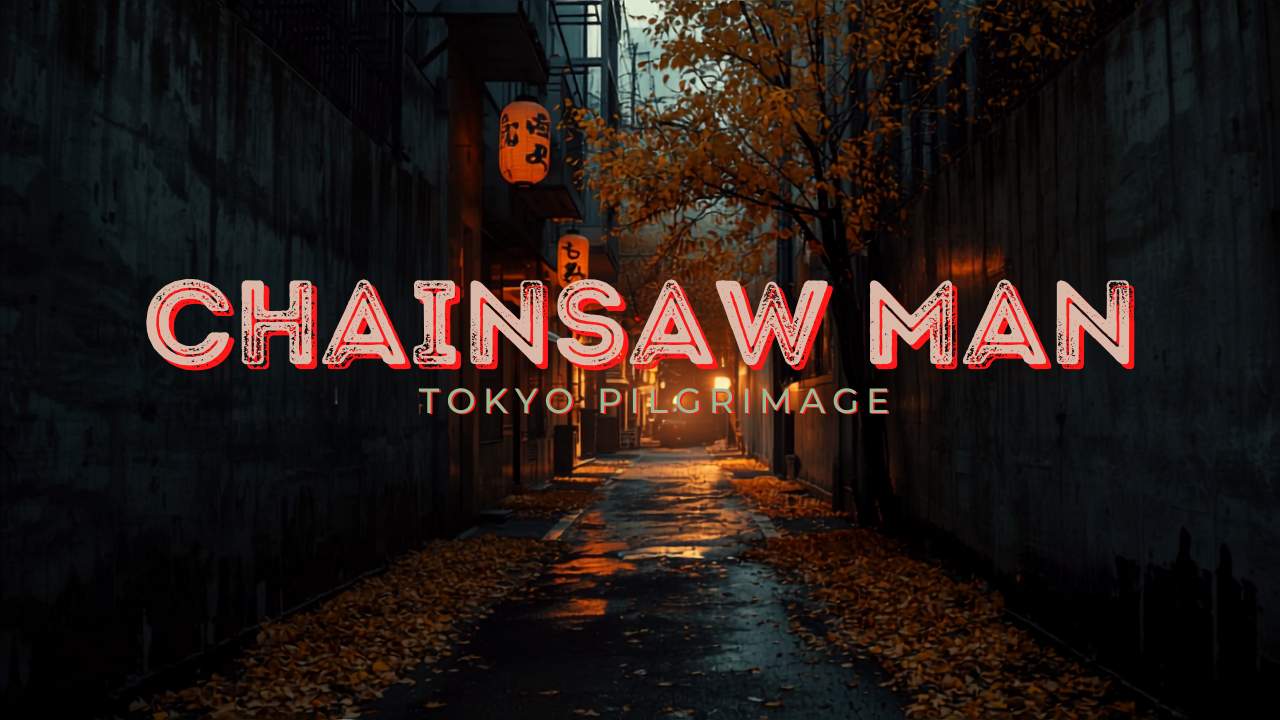
3 Real-Life Chainsaw Man Pilgrimage Spots in Tokyo You Must Visit in Autumn 2026
There’s something almost spiritual about standing on the exact street corner that inspired your favourite anime scene. The air feels different. The colours look heightened. And for a fleeting second, the line between fiction and reality dissolves entirely. That feeling — raw, electric, a little overwhelming — is precisely what draws thousands of anime pilgrims to Tokyo every single year.
If you’ve been caught in the cultural wildfire that is Chainsaw Man, Tatsuki Fujimoto’s brutally stylish manga turned anime phenomenon, then you already know the series has a visual language unlike anything else in the medium. Dark, cinematic, soaked in melancholy and diesel fumes — and much of it eerily mirrored in real Tokyo streetscapes.
Autumn 2026 is shaping up to be a spectacular time to visit the Japanese capital. October and November drape Tokyo in crimson and amber foliage, the summer crowds have dissolved, and the cooler air makes long walking tours genuinely pleasurable. Whether you’re a seasoned anime pilgrim or planning your first seichi junrei (聖地巡礼), this guide maps out three unmissable real-life Chainsaw Man locations in Tokyo — complete with access directions, seasonal tips, and everything you need to make your trip unforgettable.
- 🗺️ Quick Summary
- 1. Sangenjaya Back Streets — Where Denji’s Gritty Everyday Life Begins
- 2. Shibuya Station Scramble & Underpass — The Chaos That Defines the Series’ Urban Dread
- 3. Koenji Shotengai Shopping Street — Pochita’s World of Dusty Storefronts and Quiet Longing
- ✈️ Travel Tips for Your Chainsaw Man Tokyo Pilgrimage
- ❓ Frequently Asked Questions
- Conclusion: Let Tokyo Tell You the Rest of the Story
🗺️ Quick Summary
| # | Spot | Area | Best Time to Visit | Crowd Level |
|---|---|---|---|---|
| 1 | Sangenjaya Back Streets | Setagaya, Tokyo | Weekday mornings | Moderate |
| 2 | Shibuya Station Scramble & Underpass | Shibuya, Tokyo | Early morning (6–8 AM) | High |
| 3 | Koenji Shotengai Shopping Street | Suginami, Tokyo | Late afternoon | Low–Moderate |
1. Sangenjaya Back Streets — Where Denji’s Gritty Everyday Life Begins
If one neighbourhood in Tokyo captures the worn-in, working-class soul of Chainsaw Man’s early chapters, it’s Sangenjaya (三軒茶屋). Tucked into Setagaya Ward, this area is beloved by locals for its tangle of narrow shotengai (shopping arcades), izakayas spilling warm light onto cracked pavements, and a general atmosphere that feels gloriously un-curated compared to Tokyo’s shinier districts.
Look closely at Fujimoto’s panel compositions in Volume 1 — the cramped apartment corridors, the flickering overhead signage, the streets that seem to lean inward as if whispering — and you’ll find their spiritual twins winding through Sangenjaya’s back alleys, particularly around the Sangenjaya Sunroad and the labyrinthine lanes east of Sangenjaya Station.
The area around Sangen Jaya Chazawa-dori Avenue is especially evocative. The low-rise buildings, vintage dry-goods shops, and handwritten menu boards all contribute to a Showa-era texture that feels lifted directly from Denji’s miserable-yet-charming day-to-day existence before his contract with Pochita. Stand at the right corner at dusk, when the neon begins to flicker on and the smell of yakitori drifts across the street, and you may genuinely feel like you’ve stepped into the panels.
This neighbourhood rewards slow exploration. Budget at least two to three hours, bring a good camera, and don’t rush.
Access
Take the Tokyu Den-en-toshi Line or Tokyu Setagaya Line to Sangenjaya Station (三軒茶屋駅). The back streets begin immediately north and east of the station’s Carrot Tower exit. Google Maps search: Sangenjaya Sunroad Shopping Street.
🍂 Autumn/Season Tip
By late October and early November, the ginkgo trees lining nearby Ikejiri-Ohashi glow a luminous gold. Combine your Sangenjaya pilgrimage with a short walk north to catch the foliage — the contrast of warm yellows against grey urban architecture is genuinely cinematic and perfect for photography. Visit on a weekday morning for the quietest experience; weekend afternoons can get lively with local shoppers.
2. Shibuya Station Scramble & Underpass — The Chaos That Defines the Series’ Urban Dread
No location better embodies the overwhelming sensory assault of Chainsaw Man’s urban battle sequences than Shibuya. The manga and anime repeatedly return to imagery of anonymous crowds, brutalist concrete underpasses, and the existential weight of being one small body in an ocean of people — and nowhere in Tokyo delivers that feeling more viscerally than the Shibuya Scramble Crossing and its surrounding underpasses.
The Shibuya Station east exit underpass — a long, low-ceilinged pedestrian tunnel connecting the station to Miyamasuzaka — has become a well-documented pilgrimage spot for Chainsaw Man fans, its fluorescent lighting, tiled walls, and echoey acoustics closely mirroring several key scenes in the anime adaptation. Director Ryū Nakayama and the team at MAPPA clearly drew visual inspiration from spaces exactly like this: functional, slightly oppressive, buzzing with the hum of urban infrastructure.
The Scramble Crossing itself (officially known as Shibuya Crossing) needs little introduction, but seen through a Chainsaw Man lens it transforms into something more unsettling. At peak hours, over 3,000 people cross simultaneously from all directions — an image that captures the series’ recurring theme of humanity as an undifferentiated mass, fragile and chaotic. Stand in the middle of it, just once, and you’ll understand why Fujimoto chose urban Tokyo as his canvas.
For a more structured experience of Shibuya’s anime geography, you can book a guided anime walking tour of Shibuya which contextualises these locations within broader otaku culture history.
Access
Shibuya Station (渋谷駅) is served by the JR Yamanote Line, Tokyo Metro Ginza/Hanzomon/Fukutoshin Lines, and Tokyu Lines. The scramble crossing is directly outside the Hachiko Exit (west side). The east exit underpass is accessible from the station’s B1 concourse — follow signs toward Miyamasuzaka or the Mark City east exit. No admission fee.
🍂 Autumn/Season Tip
For the most atmospheric (and most photographable) experience, arrive at the scramble crossing between 6:00 AM and 7:30 AM on a weekday in early November. The autumn light hits at a low golden angle, the crowds are a fraction of peak-hour density, and the surrounding buildings are often wreathed in a light river mist that gives the whole scene an almost supernatural quality. Avoid Halloween week (late October) if crowds are not your thing — Shibuya’s Halloween gatherings, while spectacular, make pilgrimage photography nearly impossible.
3. Koenji Shotengai Shopping Street — Pochita’s World of Dusty Storefronts and Quiet Longing
Of all the locations on this list, Koenji (高円寺) is the one that feels most like a secret. Located in Suginami Ward, about 15 minutes west of Shinjuku on the JR Chuo Line, Koenji has long been Tokyo’s spiritual home for vintage clothing, indie music, second-hand bookshops, and a general bohemian energy that gentrification somehow hasn’t managed to extinguish.
Chainsaw Man’s visual references to cluttered, slightly decaying commercial streets — racks of goods spilling onto pavements, hand-painted signage, buildings that seem to be held together by habit rather than engineering — find their closest real-world analogue in Koenji’s shotengai network, particularly the Koenji Pal Shopping Street and the narrower Koenji Look Shopping Street running south of the station.
The second-hand culture here also resonates with the series on a thematic level. Chainsaw Man is, at its heart, a story about people and devils discarded by society — reused, repurposed, given unlikely second chances. The vintage shops of Koenji, with their rails of pre-loved denim and shelves of worn paperbacks, carry that same spirit of things refusing to be finished. It sounds poetic, but standing in one of these cramped little shops surrounded by decades of accumulated stuff, you feel it in your chest.
Don’t miss Koenji Hikawa Shrine nearby — a small, mossy sanctuary just ten minutes on foot from the station, whose overgrown torii gate and dim forest interior echo the series’ quieter spiritual undertones.
For fans wanting to pair their pilgrimage with a dedicated anime merchandise hunt, Koenji’s second-hand shops frequently stock rare doujinshi, artbooks, and figurines. You can also book a Tokyo anime merchandise tourthat combines areas like Koenji with Nakano Broadway and Akihabara in a single curated day.
Access
Take the JR Chuo Line (Local) or JR Sobu Line to Koenji Station (高円寺駅). Both the north and south exits feed directly into the shotengai networks. The Koenji Pal entrance is immediately south of the station. No admission fee. Shops generally open from 11:00 AM to 8:00 PM.
🍂 Autumn/Season Tip
Koenji is genuinely lovely in autumn. The Koenji Awaodori Festival (one of Tokyo’s biggest summer events) is long finished by October, leaving the streets peaceful and navigable. Hit the area on a Saturday or Sunday afternoon in late October — shop owners are often chattier on weekends, and you may stumble across pop-up vintage markets in the covered arcades. The low canopy of the shotengai rooftops traps the warm autumn afternoon light in a way that makes every photograph look like a still from a Studio Ghibli film.
✈️ Travel Tips for Your Chainsaw Man Tokyo Pilgrimage
Getting Around
All three spots are well-connected by Tokyo’s efficient train network. A Suica or Pasmo IC card (available at any major station) is essential — tap in, tap out, no ticket-buying faff. If you’re staying in central Tokyo (Shinjuku, Shibuya, or Akihabara are all excellent bases), each location is reachable within 30–40 minutes.
For accommodation close to the Shibuya and Sangenjaya spots, Agoda frequently lists excellent mid-range hotels in the Shibuya/Setagaya area —that put you within easy walking distance of multiple pilgrimage spots.
What to Bring
- A printed or downloaded pilgrimage map (fan communities on Reddit’s r/ChainsawMan and dedicated seichi junrei sites like Anime Tourism maintain up-to-date location databases)
- A mirrorless or smartphone camera with a wide lens — the narrow lanes of Sangenjaya and Koenji particularly reward wide-angle shots
- Comfortable walking shoes — you will clock 15,000+ steps easily across a full pilgrimage day
- Cash — many of Koenji’s vintage shops are cash-only
Best Autumn Dates
- Mid-October to mid-November is the sweet spot: foliage is at or near peak, temperatures sit at a pleasant 12–18°C, and the summer typhoon season is firmly behind you.
- Early November weekdays offer the optimal balance of autumn colour and manageable crowds.
- Check the Japan Meteorological Corporation’s koyo (foliage) forecast closer to your travel date for precise peak timing.
Respect the Locations
These are real, lived-in neighbourhoods. Keep noise levels considerate, ask permission before photographing private residences or shop interiors, and — especially in Sangenjaya’s residential back lanes — be mindful that actual people live and work there. The best pilgrims leave a neighbourhood exactly as they found it.
❓ Frequently Asked Questions
Q: Do I need to be a manga reader to enjoy these locations, or is watching the anime enough?
Absolutely no manga knowledge required. The anime adaptation by MAPPA is visually faithful enough that any fan of the show will recognise the aesthetic references immediately. That said, manga readers may spot additional compositional nods in the Sangenjaya alleyways.
Q: Are these spots close enough to combine in a single day?
Yes — with efficient routing. Start early in Sangenjaya (morning), move to Shibuya (late morning/lunch), then head to Koenji (afternoon/evening). The Tokyu Den-en-toshi Line connects Sangenjaya to Shibuya in about 10 minutes; from Shibuya, the JR Yamanote Line to Shinjuku and then the Chuo Line to Koenji takes around 25 minutes.
Q: Is there official Chainsaw Man merchandise available at these locations?
Not at the pilgrimage spots themselves — these are organic, real-world locations rather than official tie-in venues. However, Koenji’s second-hand shops and Akihabara (a short train ride away) are excellent for both official and fan-made Chainsaw Man merchandise.
Q: What Japanese phrases should I know for a pilgrimage trip?
A few essentials: Sumimasen (すみません) — “Excuse me/Sorry”; Shashin wo totte mo ii desu ka? (写真を撮ってもいいですか?) — “May I take a photo?”; Ikura desu ka? (いくらですか?) — “How much is this?”
Q: Is autumn 2026 a good time in terms of Japan tourism levels?
Japan’s inbound tourism has rebounded strongly post-pandemic, and autumn remains one of the most popular travel seasons. Book accommodation and any guided tours at least 3–4 months in advance to secure good options at reasonable prices.
Conclusion: Let Tokyo Tell You the Rest of the Story
Chainsaw Man is, underneath all its viscera and existential horror, a story about longing — for connection, for purpose, for a world that makes some kind of sense. And there’s no better city in the world to feel that particular flavour of longing than Tokyo in autumn, when the leaves are burning gold and the streets smell of roasting chestnuts and the whole city seems to be exhaling after a long, hot summer.
Sangenjaya will show you Denji’s world of cramped possibility. Shibuya will hit you with the full weight of human anonymity. Koenji will remind you that discarded things still have stories worth telling.
Take your time. Get lost. Let the city find you.
Safe travels, and may your chainsaw always rev.


コメント